Rescuing unsold organic fruit & vegetables.
A mobile app connecting growers and shoppers around unsold organic produce — to cut food waste at the source.
Client
Sauve ton Bio
Year
2025
Role
Product designer & developer
Stack
React Native, Firebase
The context
Every year, 10 million tonnes of food are thrown away in France — a significant share of it by growers themselves, for lack of a channel to move unsold produce quickly and locally.
Founded in 2019 in Nantes by Antoine Rubalec, Sauve Ton Bio set out to support organic growers against food waste, while giving everyone access to sustainable, responsible food.
The initiative was quickly joined by others who share that conviction and are determined to create a lasting, accessible impact, contributing to a fairer model that treats the planet with more respect.
"Eating organic and local shouldn't take any effort. Everything we do comes down to that sentence."
— Antoine, founder of Sauve ton Bio
The approach
The approach was built around one guiding principle: reduce friction at every step of the journey, from finding a shop to picking up the basket. Every screen was designed to minimise cognitive load and guide the user towards action, backed by a consistent design system and reusable components.
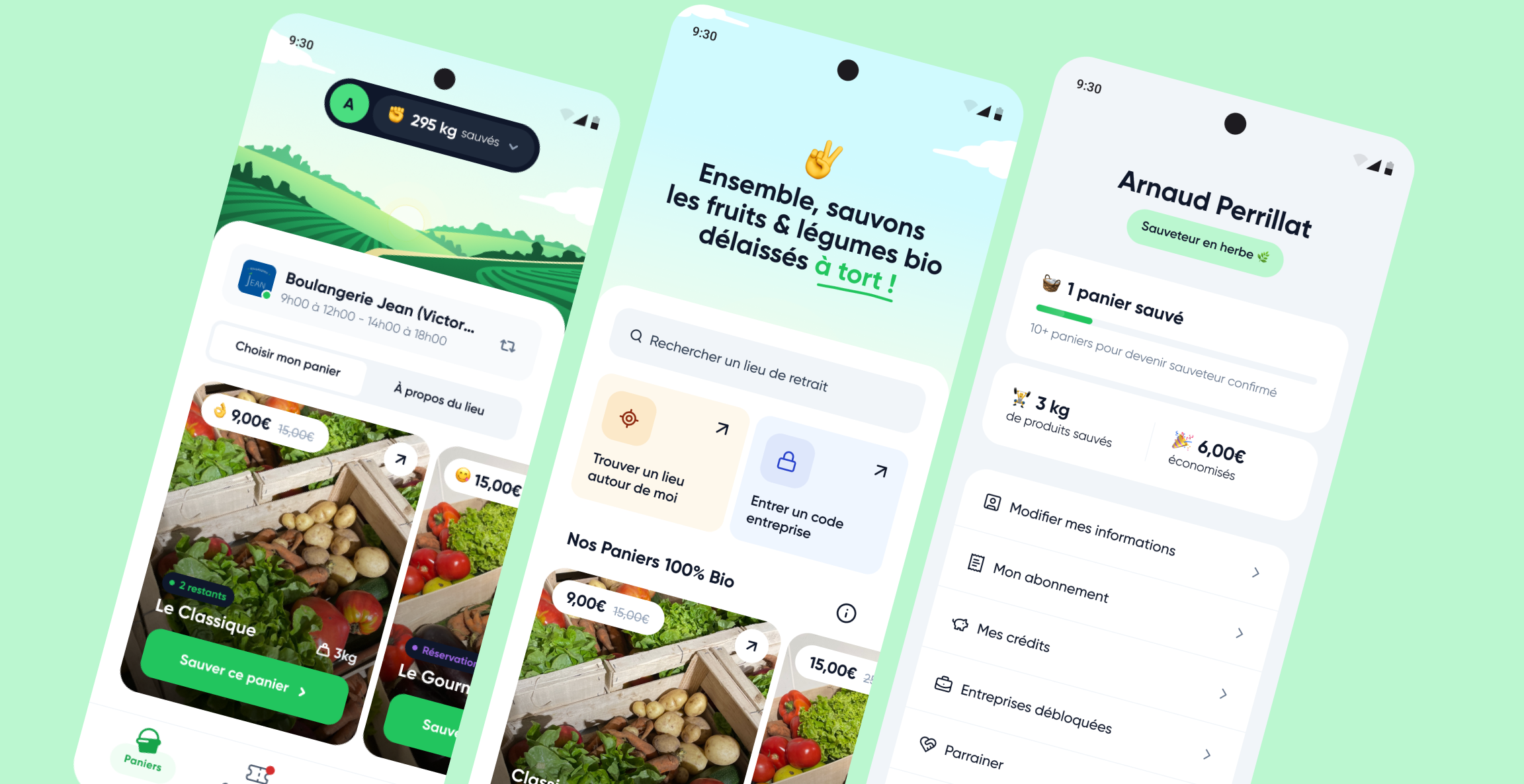
1. Location-based discovery
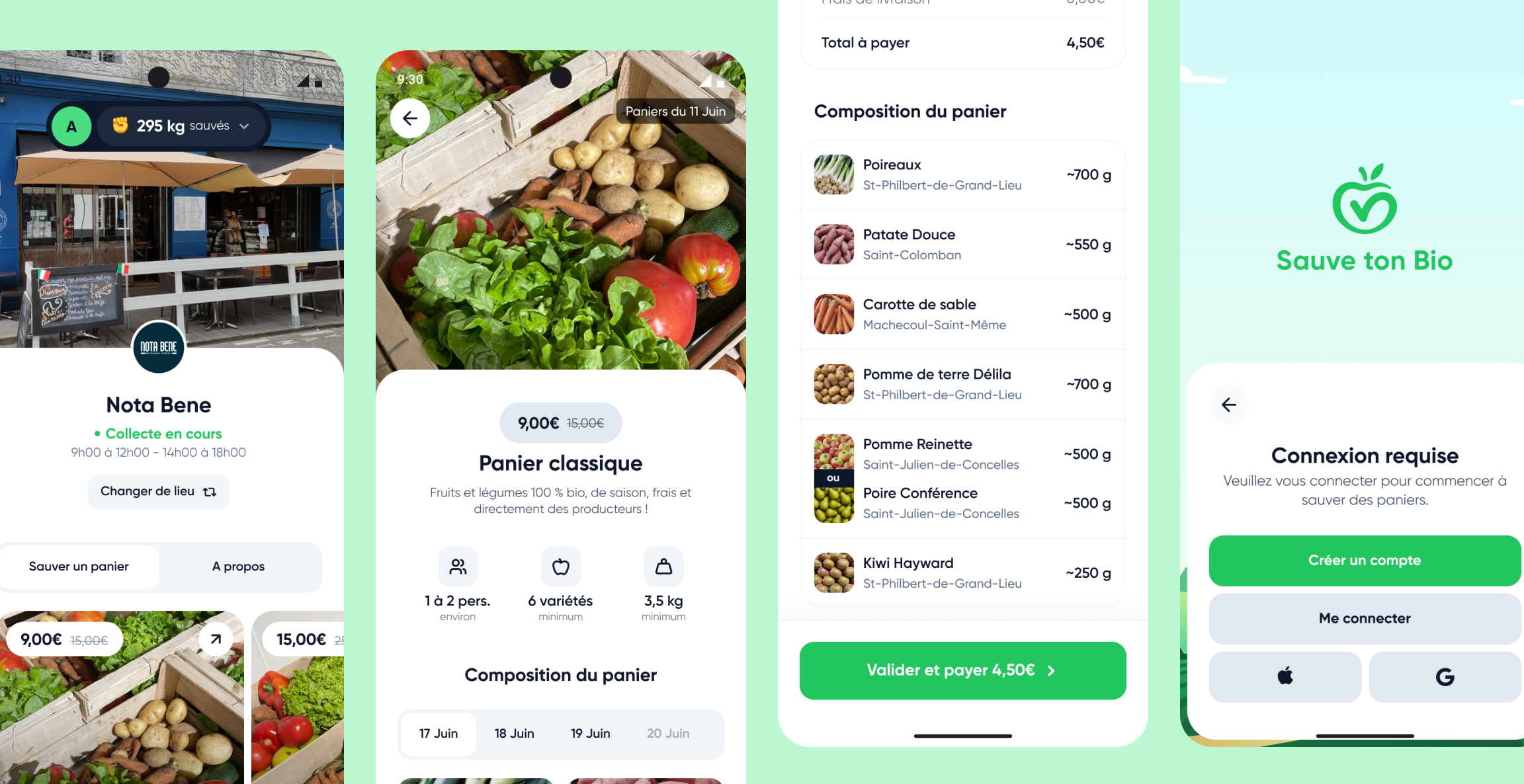
Search by location and an interactive map to instantly find the nearest shops, with careful handling of inactive or closed shops to avoid frustration at the end of the journey.
2. A bottom-sheet architecture
A consistent modal system across the whole app, which keeps users in their context rather than sending them to a dedicated screen for every interaction.
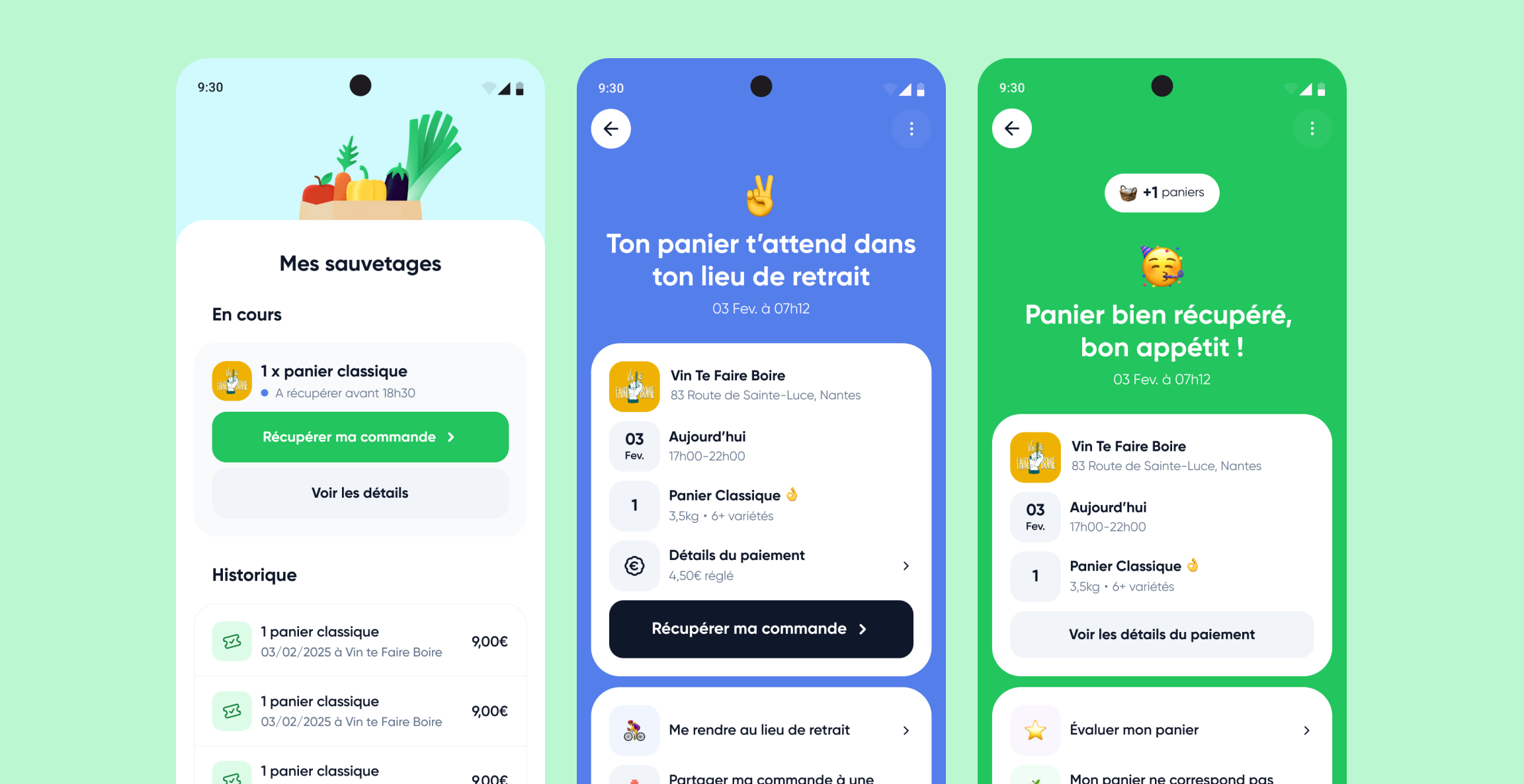
3. A smooth payment flow
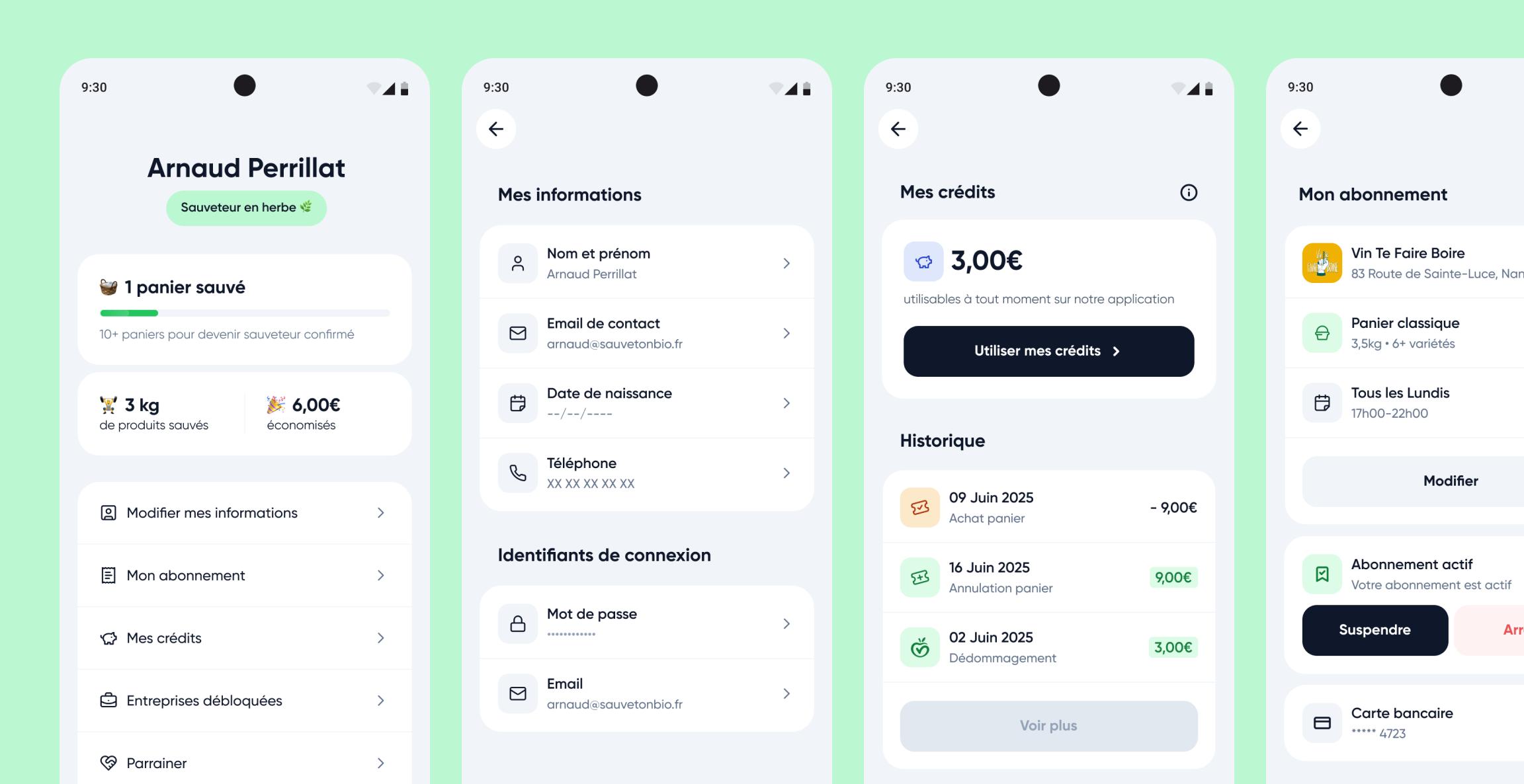
A Stripe integration designed to minimise steps: one-off payments, card management, subscriptions and a credit system all unified under the same logic.
4. Engagement mechanics
Basket ratings, referrals, credits and personal statistics folded in discreetly, to build loyalty without distracting from the core experience.
5. A consistent visual system
Basket ratings, referrals, credits and personal statistics folded in discreetly, to build loyalty without distracting from the core experience.
Results
150,000+
Baskets rescued
580,000+
Kg rescued
15,000+
Users
What I took away
- Simplicity is the real technical challenge — hiding complexity (payments, geolocation, subscriptions, shop states) behind an obvious interface takes more work than exposing it.
- A feature-based architecture pays off over time — splitting the app into self-contained modules (16 of them) made every change faster and safer.
- Anticipating edge cases is what perceived quality is made of — handling an inactive shop, a closure, a failed payment: those invisible details are what make an app trustworthy.
- A design system is an accelerator — investing early in shared components and tokens reduced design friction and kept things consistent as the app grew.
- Impact as a product driver — designing for a concrete cause (cutting waste) naturally steers the trade-offs towards what serves the user and the mission.
Download the app
Available on mobile. Pick your platform.